1930 FIFA World Cup
First World Cup, first American dream on the global stage — and a historic run to the semifinals.

Ypsilon from Finland · CC0
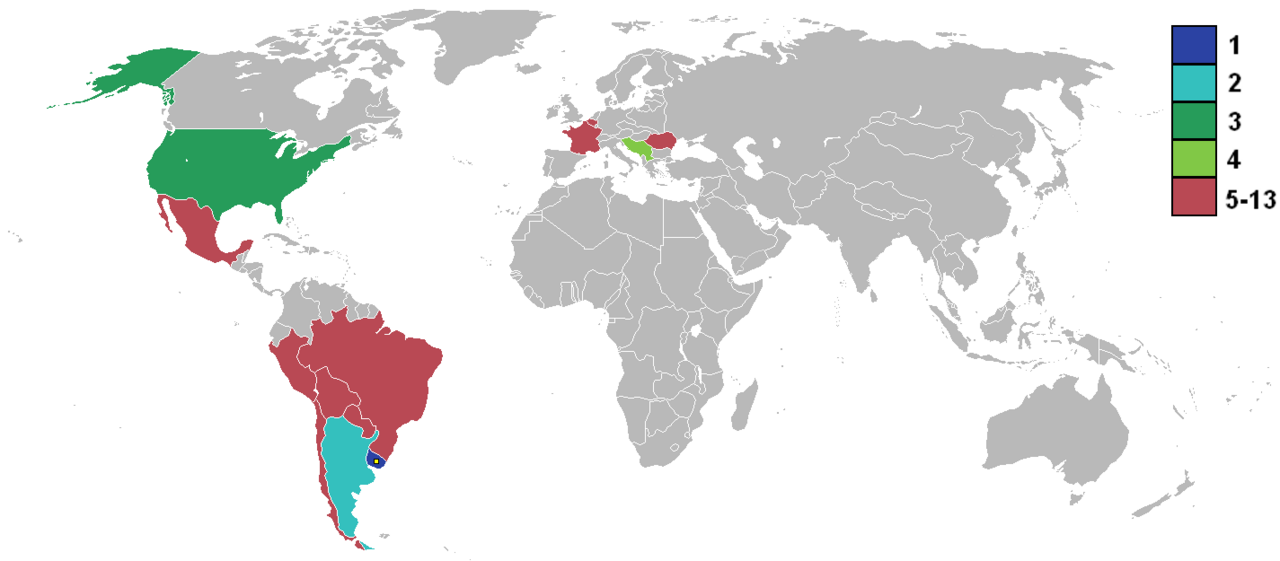
The 1930 FIFA World Cup, hosted by Uruguay, was the inaugural edition of football's greatest tournament and the first time the United States Men's National Team competed on the world stage. The USA were drawn into Group 4 alongside Paraguay, Belgium, and Bolivia, and won their group to advance to the semifinals. Though the team ultimately fell to Argentina, the tournament marked a defining moment in American football history, placing the sport on the global map for the first time.
- USA Group
- Group 4 (with Paraguay, Belgium, Bolivia)
- USA Group Finish
- 1st of 4 (advanced to semifinals)
- USA Record
- 2 wins, 1 loss overall
Lore & Background
In the summer of 1930, a small squad of American footballers boarded a ship for Montevideo, Uruguay, carrying the hopes of a nation that had only recently codified its own national team. The 1930 World Cup was a landmark event in every sense: it was the first time FIFA gathered the world's national sides into a single competition, and for the United States it was the first time they would test themselves against the established powers of European and South American football. The group draw placed them in Group 4 alongside Paraguay, Belgium, and Bolivia — a mix of regional rivals and debutants that made the USA's path to the semifinals a thrilling sprint. The Americans' campaign was defined by a commanding 3-0 victory over Belgium, a result that electrified the small American expatriate community in Uruguay and proved the team could compete with the best in the region. That win was followed by a 3-0 defeat of Paraguay, securing the group top spot and a place in the semifinals. There, the USA faced Argentina and suffered a 6-1 loss, a match that exposed the gap between American football and the more technically refined South American game. For American football, the 1930 World Cup remains a touchstone — the moment the sport crossed the Atlantic and met the world. The memories of that brief, intense fortnight in Uruguay, the roar of the Estadio Centenario, and the pride of winning Group 4 all became part of the team's mythology, a foundation upon which every subsequent generation of American international players would build their ambitions.
In Their Own Story
The July sun hung low over the Estadio Centenario, painting the terraces in shades of amber and rust. The American players stood in the tunnel, hearing the distant thump of Paraguayan drums from the stands above. The captain clapped his hands once, sharply, and the noise in the tunnel died. They walked out onto the grass — a pale, sun-baked green that smelled of cut turf and chalk — and the crowd, mostly Uruguayan, gave them a polite, uncertain cheer. Three goals would come. Two would leak back in. And when the final whistle blew, a small knot of American fans in the upper tier were on their feet, arms raised, shouting a name they had rehearsed on the ship crossing. It was not enough. It was not a medal. But for the men in the white shirts, standing in the middle of the pitch with their lungs burning and the Uruguayan sky turning violet above them, it was the first time the world had watched them play. And that, they knew, was where it started.
Reader's Guide
The USA entered Group 1 as a relative unknown, facing Paraguay, Romania, and Yugoslavia in a round-robin format. The opener against Paraguay in Montevideo was the match that defined the campaign: a tense, physical contest in which the Americans edged ahead 3-2, with goals spread across the match and a late Paraguayan push that kept the result in doubt until the final minutes. The win was a statement — the USA could score, could defend, could compete. The second fixture, against Yugoslavia, was a different story. The Yugoslavs were faster, more technically assured, and the 4-0 scoreline reflected a team overwhelmed by pace and positional discipline. The Americans were pinned in their own half for long stretches, and the gap between the two footballing traditions was stark. This result, combined with the group's other results, meant the USA's fate hinged on the final match. The 3-0 victory over Romania was comfortable in result but not in execution. The Americans controlled possession and created clear chances, but the match lacked the urgency of the Paraguay game. Finishing second in the group was a respectable outcome for a first World Cup, but the elimination was a sobering reminder that the knockout rounds demanded a level of consistency the team had not yet reached. The emotional high was the Paraguay win; the low, the Yugoslav defeat. Together, they set the template for American football's long road toward the world stage.
Did You Know?
- The 1930 FIFA World Cup was the very first edition of the tournament, making every participant — including the USA — part of a historic first.
- The USA's 3-0 win over Belgium was a dominant performance that helped the Americans top Group 4 and reach the semifinals.
- The tournament format in 1930 had no quarter-finals; group winners advanced directly to the semifinals, meaning finishing first was the only path forward.
- Uruguay, the host nation, went on to win the inaugural World Cup, defeating Argentina in the final at the Estadio Centenario.
The Birth of a Global Tournament
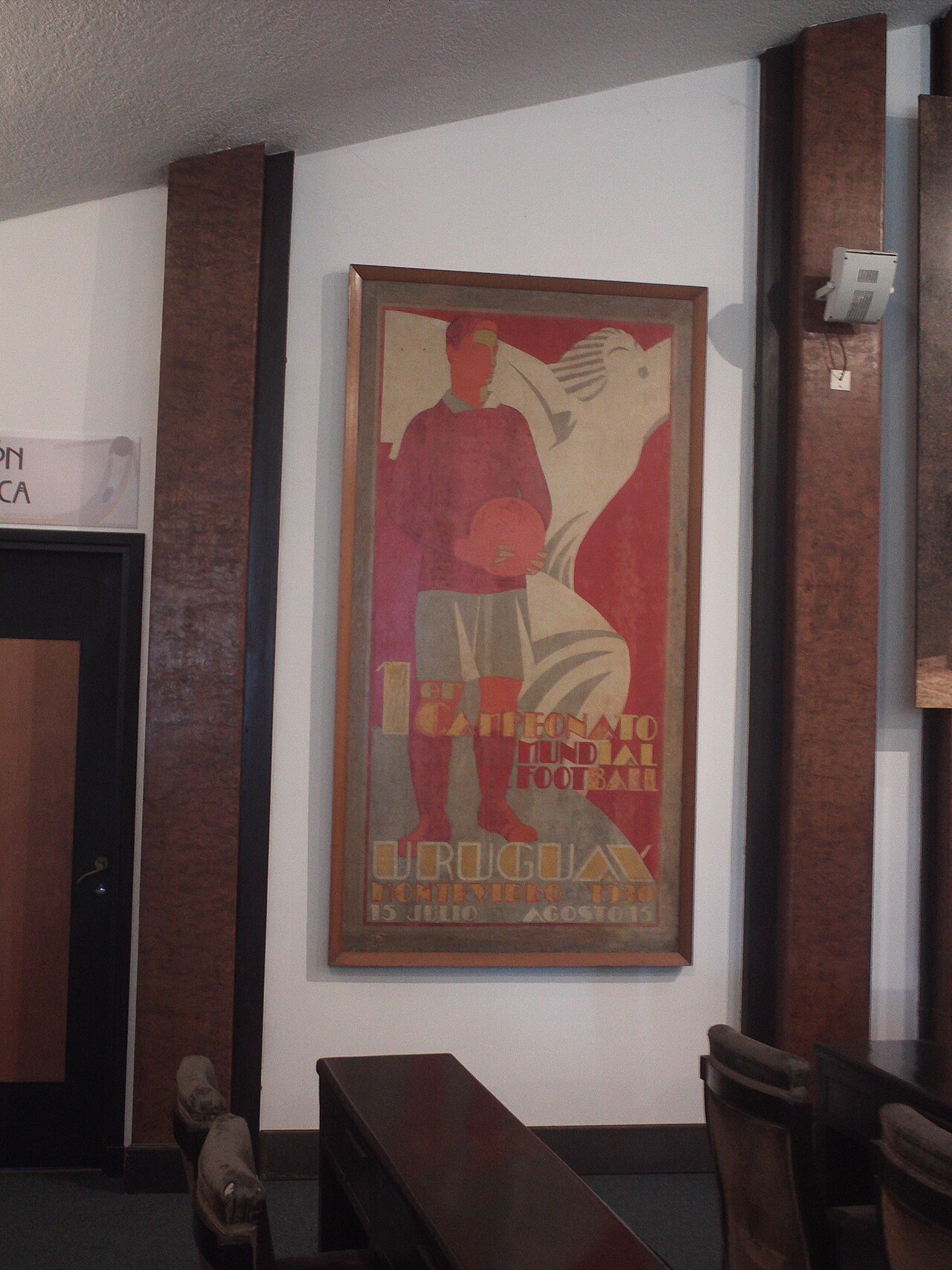
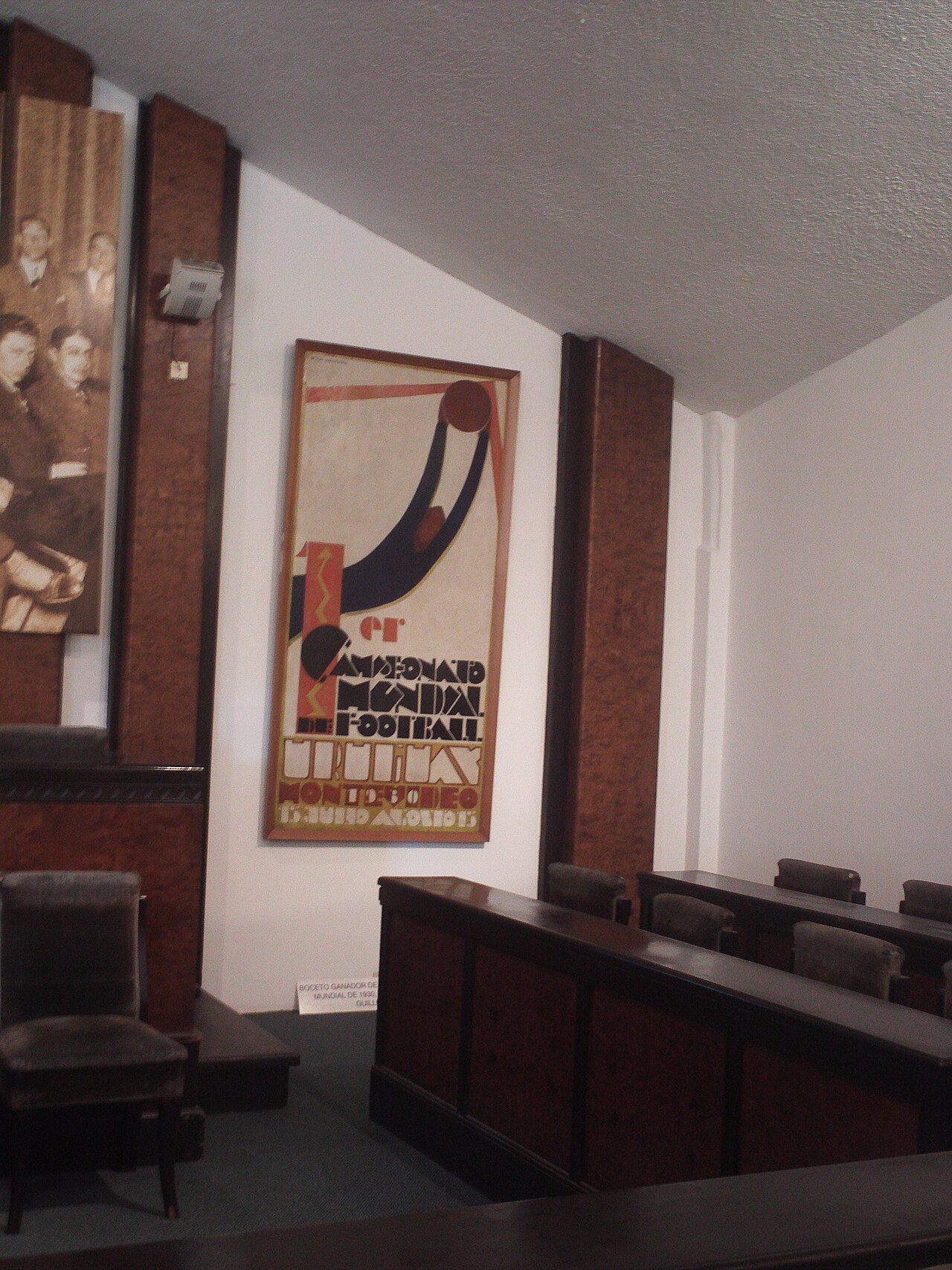
FIFA had been managing football at the Summer Olympics for the International Olympic Committee since the early 1900s, and the strong showings in 1924 and 1928 convinced the governing body that a standalone world championship was overdue. At the 17th FIFA congress in Amsterdam in May 1928, president Jules Rimet formally proposed the competition, and vice-president Henri Delaunay captured the spirit of the moment by declaring that international football could no longer be confined within the Olympic framework. The board accepted the proposal, and the stage was set for something entirely new. Uruguay emerged as the natural host. The nation was preparing to mark the centenary of its first constitution, and its national team had just defended its Olympic football title in 1928. When rival bids from Italy, Sweden, the Netherlands, Spain, and Hungary all withdrew, Uruguay's selection became a foregone conclusion. The tournament was scheduled for 13 to 30 July 1930, and all matches would be staged in Montevideo, with the majority played at the newly constructed Estadio Centenario.
The Struggle to Fill the Field
The first World Cup was the only edition without a qualification round. Every FIFA-affiliated nation received an invitation with a 28 February 1930 deadline. The competition had originally envisioned 16 teams in a knockout format with a possible second division, but the field never reached that mark. South American enthusiasm was enormous—eight nations entered—but the costly transatlantic crossing by ship, compounded by the Great Depression, kept most of Europe at home. No European entry arrived before the February deadline, and the sole African entrant, Egypt, was left behind when a Mediterranean storm caused their vessel to sail without them. Two months before kickoff, no European team had officially registered. FIFA president Rimet and Uruguayan diplomat Enrique Buero intervened, eventually securing four squads: Belgium, France, Romania, and Yugoslavia. Romania's entry was championed by the newly crowned King Carol II, who personally selected the squad and negotiated with employers to protect the players' jobs. France came only through Rimet's direct pressure, though star defender Manuel Anatol and coach Gaston Barreau refused to make the trip. Belgium participated at the instigation of FIFA vice-president Rodolphe Seeldrayers.
Historic Firsts on the Pitch
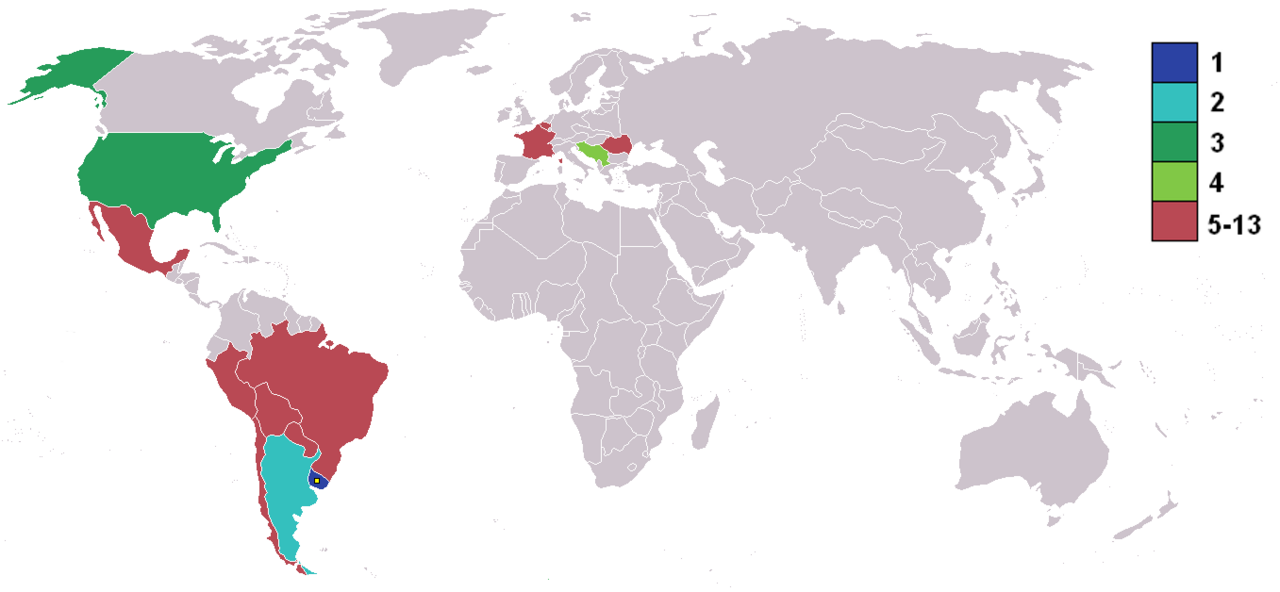
Thirteen teams—seven from South America, four from Europe, and two from North America—were divided into four groups, with each group winner advancing to the semi-finals. The tournament opened with two matches played simultaneously, and both produced historic milestones. France defeated Mexico 4-1, with Lucien Laurent scoring what would be recorded as the first goal in World Cup history. On the same day, the United States beat Belgium 3-0, and goalkeeper Jimmy Douglas posted the tournament's first clean sheet. Argentina, Uruguay, the United States, and Yugoslavia each won their groups to reach the semi-finals. The final, staged before a crowd of 68,346, saw hosts and pre-tournament favourites Uruguay defeat Argentina 4-2 to claim the first World Cup title in history. The final carried a unique linguistic dimension: both finalists were Spanish-speaking nations, making it the first final contested by two countries sharing the same primary language. That distinction would stand for 96 years, until the 2026 final between Argentina and Spain. As of 2026, it also remains the only final ever contested between two South American nations, since the 1950 Brazil-Uruguay match was technically the deciding game of a final group stage rather than a true cup final.
A Century in the Making
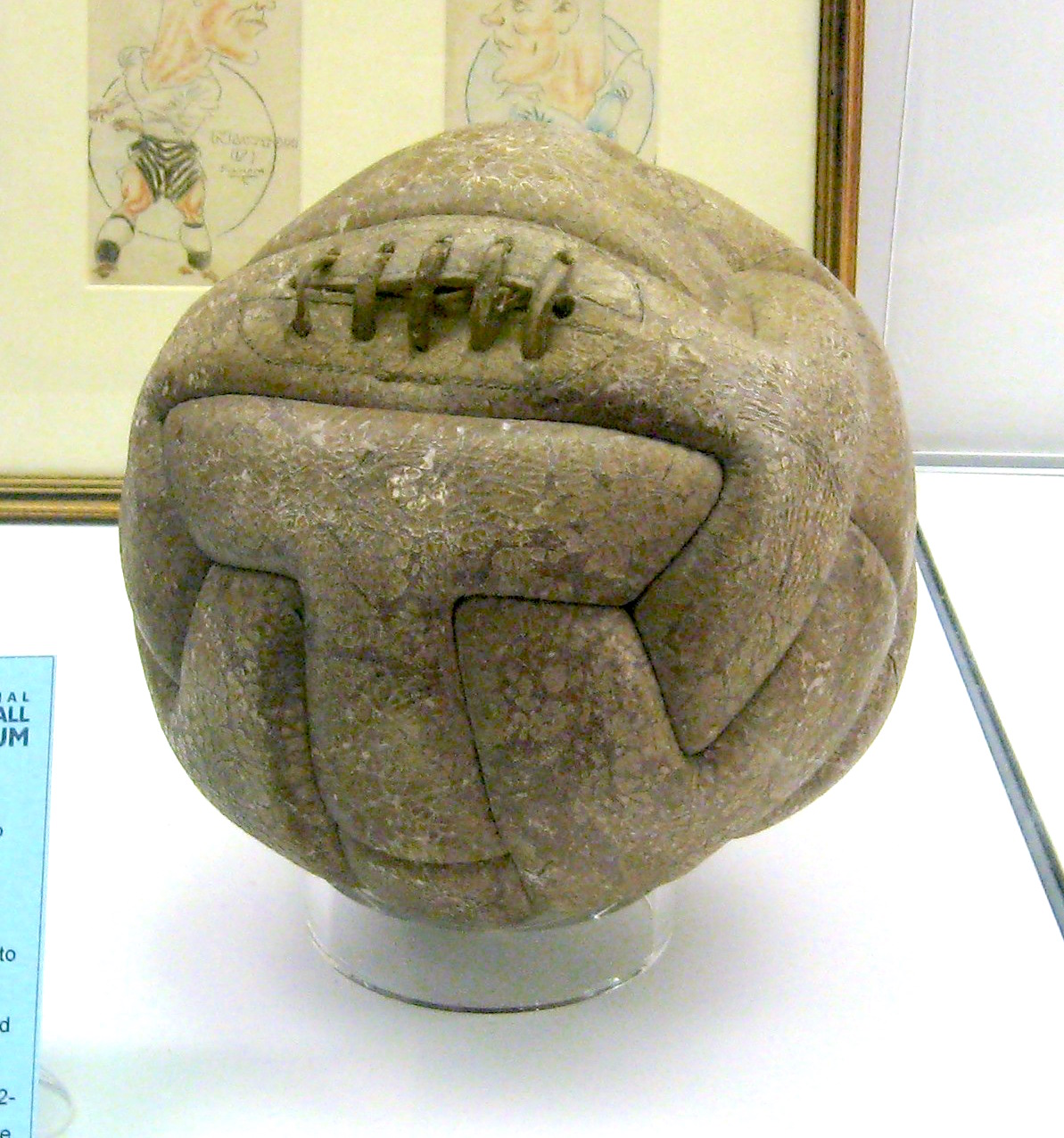
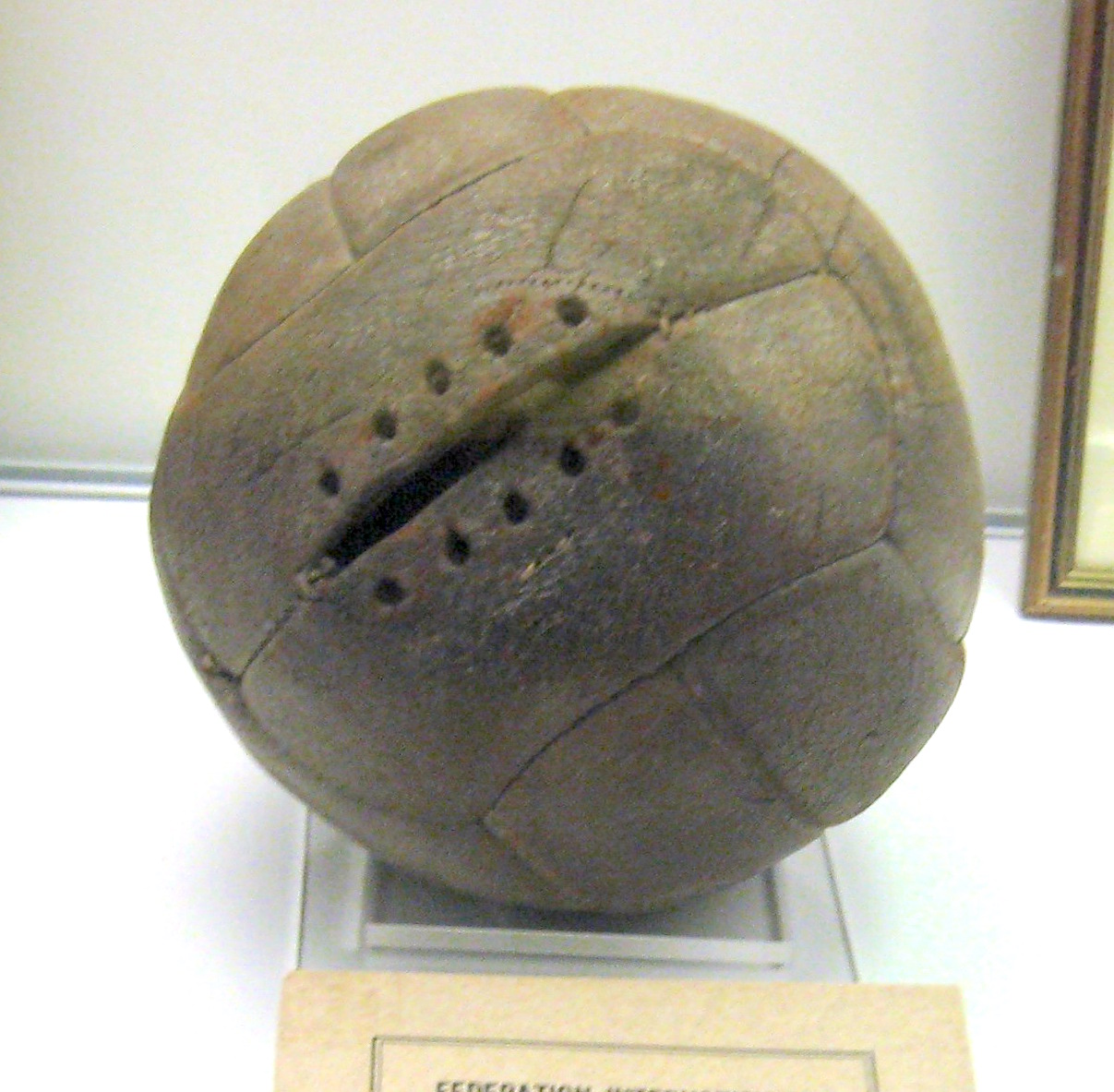
The 1930 World Cup cast a long shadow over the decades that followed. Francisco Varallo of Argentina, who played in the tournament, remained the last surviving participant until his death in 2010 at the age of 100. His passing marked the quiet end of an era, the final living link to the inaugural competition. The physical legacy endures as well. The purpose-built Estadio Centenario in Montevideo, which hosted the majority of matches, will stage the opening match of the 2030 FIFA World Cup, a ceremony designed to honour the centennial anniversary of the tournament's inception. The official ball used throughout the 1930 competition was the T-Model, a detail that collectors and historians still reference. The journey of the European teams also left a trace in the record. The Romanians boarded the SS Conte Verde at Genoa, while the French and Yugoslavs were picked up at Villefranche-sur-Mer on 21 June, and the Belgians embarked from Barcelona. The Conte Verde also carried Rimet, the trophy, and the three designated European referees. The ship docked in Rio de Janeiro on 29 June to collect the Brazilian squad before arriving in Uruguay on 4 July.
Gallery
Frequently Asked Questions
What was the 1930 FIFA World Cup for the USMNT?
It was the very first World Cup ever held, staged in Uruguay, and it marked the first time the United States Men's National Team ever stepped onto a global tournament stage. For American soccer, it was the moment the sport officially entered the international conversation.
Who did the USA face in their 1930 World Cup group?
The Americans were slotted into Group 1 together with Paraguay, Romania, and Yugoslavia. They posted a 2-1 record across those three pool matches.
How did the USA finish in the 1930 World Cup?
The team placed second out of four in their group, which meant they were knocked out before any knockout-round action could take place. Despite the early exit, the run still counted as a milestone for the program.
Why does the 1930 World Cup matter in American soccer history?
It was the first time U.S. players competed against the rest of the world, effectively putting the sport on the global map for American fans. That single tournament set the benchmark every subsequent national-team campaign has been measured against.
Who won the 1930 FIFA World Cup?
Host nation Uruguay lifted the inaugural trophy. The United States, though eliminated in the group stage, was part of the original field that made that first-ever World Cup possible.
More in Tournaments & Competitions
Elsewhere in the United States Mens National Team universe
Spotted an error? Know more?
This is a living reference — every entry is fact-audited, and reader corrections feed straight into our audit queue. Suggest an edit · See this site's audit record