Cobi Jones
The left foot that turned a young nation's midfield into a stage for magic.

Prayitno / Thank you for (12 millions +) view from Los Angeles, USA · CC BY 2.0
Cobi Jones—born Robert Jones, but forever known to American soccer fans as Cobi—was one of the most gifted creative midfielders the United States Men's National Team has produced. A visionary passer with an eye for the through-ball and a left foot that could bend a free kick into the top corner, he anchored the attacking midfield of the 1990s 'Golden Generation' that carried the sport from a niche pastime toward genuine national attention. His career on the international stage spanned two World Cups—the 1994 tournament hosted on American soil and the 1998 showpiece in France under Bora Milutinović—and a stretch of pioneering MLS seasons that helped give the young league its first recognizable stars. For a generation of American fans who grew up watching the USMNT on local cable, Cobi was the player who made a midfield pass look like magic.
- Position
- Attacking / Central Midfielder
- National Team
- United States
- World Cup Appearances
- 1994 (USA), 1998 (France)
- Era
- 1990s 'Golden Generation'
- Notable Brother
- Chris Jones (also a USMNT international)
- Early MLS Club
- San Jose Clash / Tampa Bay Mutiny
- Playing Style
- Vision, set-piece delivery, creative link-play
Lore & Background
In the mid-1990s, American soccer was still finding its voice. The 1994 World Cup, hosted on home soil, gave the USMNT a platform it had never had before, and Cobi Jones was one of the players tasked with making that platform mean something. Playing in a midfield that blended the physicality of players like Tab Ramos and the flair of a younger generation, Cobi was the thread that connected defense to attack. His ability to pick out a switch in play, to deliver a whipped free kick that seemed to ignore geometry, or to thread a pass through a packed box made him a fan favorite in a way that transcended the often-frustrating results on the scoreboard. The 1998 cycle under Serbian coach Bora Milutinović is remembered as the high-water mark of that era. The US qualified for France with a squad that mixed MLS veterans with European-based players, and Cobi's creative midfield was part of the engine room. Though the tournament itself in France ended in heartbreak—three group-stage defeats—the journey there, and the belief it instilled in American fans, was a product of players like Cobi who made the team look dangerous and, crucially, *American* in its flair. Off the pitch, Cobi's story was intertwined with that of his brother Chris, who also earned caps for the USMNT. The Jones brothers became a small but symbolic part of the family fabric of early American soccer, a reminder that the sport was building its own dynasties, its own rivalries, its own legends. In the early MLS days, watching Cobi orchestrate play for the San Jose Clash or Tampa Bay Mutiny was one of the few ways American fans could see their national-team heroes in action between international windows, and that continuity helped knit the club and international games into a single, growing story.
In Their Own Story
The stadium in San Jose was half-full, the afternoon sun cutting long shadows across the grass. Cobi stood over the free kick, twenty-five yards out, the ball balanced on a small mound of turf. He could feel the weight of the season in his calves, the ache in his left knee that never quite went away. He took two steps back, then one more. The wall of defenders shifted, uncertain. He struck it with the inside of his left foot, and the ball rose, curved, and kissed the underside of the crossbar before dropping just inside the line. The net rippled. For a moment, the half-empty stands roared as if the whole city had materialized out of the California heat. Cobi didn't celebrate. He just nodded, wiped the grass from his shorts, and jogged back to the center circle, already scanning for the next pass, the next play, the next small act of magic he could offer a country still learning to believe its midfielders could be artists.
Reader's Guide
The early 1990s were a proving ground. American soccer was still a weekend hobby for most, and the USMNT was assembling its first truly competitive squad. Cobi Jones emerged from this period as a midfielder of unusual imagination—capable of seeing passes that his teammates hadn't yet learned to expect. The coaching staff, still finding its identity, gave him the freedom to roam and create. By the time the 1994 World Cup arrived on home soil, the team was a mix of MLS newcomers and players who had spent years in foreign leagues. Cobi's role was to be the creative hub, the player who turned a defensive clearance into a chance. The tournament itself was brutal—three group-stage defeats, including a painful loss to Sweden—but the mere act of hosting, of filling stadiums with American fans chanting, changed the sport's trajectory. Cobi's performances, even in defeat, planted the seed that American midfielders could compete at the highest level. The 1998 cycle under Bora Milutinović was the payoff. Bora, a charismatic and demanding coach, built a team that blended physicality with genuine technical ability. Cobi's vision and set-piece delivery were central to the attacking plan. The qualification campaign was thrilling, and the squad—featuring players like Tab Ramos, Claudio Reyna, and a young generation of MLS stars—earned the nickname 'Golden Generation.' In France, the results were harsh: losses to Croatia, a dramatic draw with Jamaica, and a defeat to Japan. But the belief was there. Cobi's passes, his free kicks, his ability to unlock a compact defense in the final minutes, reminded American fans that their team could be dangerous on any stage. After 1998, the USMNT entered a transitional period. The core of the Golden Generation began to age out, and a new generation—Reyna, Donovan, Bradley—stepped forward. Cobi's international career wound down, but his legacy endured. He had been part of the team that made American soccer *watchable*, that gave fans a reason to tune in on a Tuesday night in MLS or a Saturday World Cup group match. For the fans who were there in the '90s, Cobi was the player who made them believe the midfield could be a place of beauty, not just a place of work.
Did You Know?
- Cobi's brother Chris Jones also earned caps for the USMNT, making the Jones brothers a rare sibling duo in American international soccer of the 1990s.
- Cobi was part of the USMNT squad that hosted the 1994 FIFA World Cup, the first World Cup held in North America and the first with 24 teams.
- He was a key creative presence in the midfield during Bora Milutinović's tenure, the era that produced the USMNT's 'Golden Generation' and their 1998 World Cup qualification.
- Cobi played in the early seasons of Major League Soccer, helping to build the league's first generation of recognizable American stars alongside his international career.
From England and Brazil to an MLS Dynasty
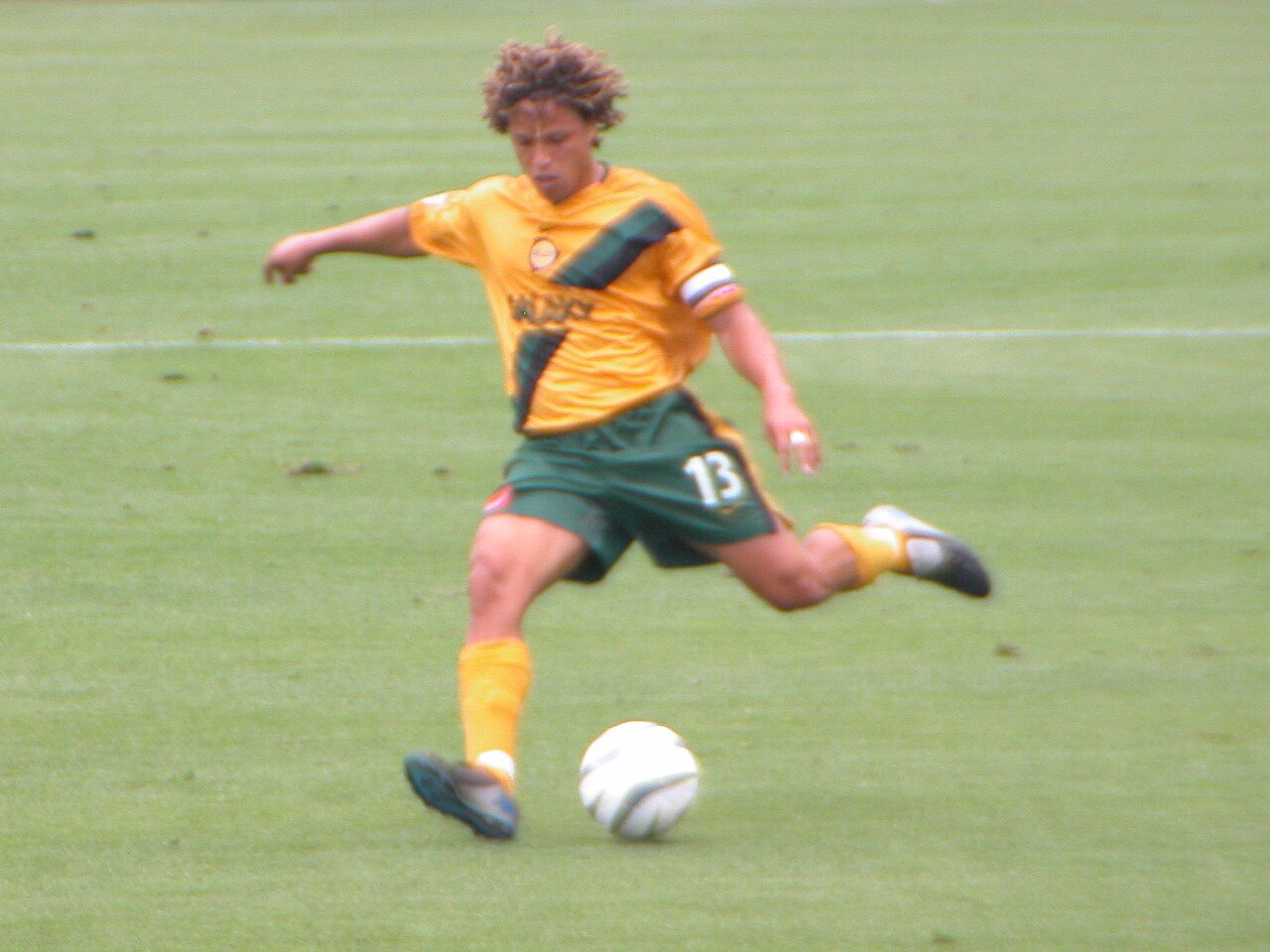
Jones launched his professional career in 1994, signing with Coventry City in England's Premier League for a single season after the World Cup was hosted on American soil. He subsequently trained with 1. FC Köln in Germany's Bundesliga and then joined Vasco da Gama in Brazil following standout performances at the 1995 Copa America. Yet his Brazilian stint lasted only a handful of months before he committed to the brand-new Los Angeles Galaxy for MLS's 1996 inaugural campaign. That choice became the defining arc of his playing life. Jones spent eleven full seasons with the Galaxy, ultimately becoming the final player in the league's history to stay with his original franchise from its founding. His peak arrived in 1998, when he posted 51 points from 19 goals and 13 assists to rank second in the league, earned MLS Best XI honors, and was named U.S. Soccer Athlete of the Year. Over his tenure he added two MLS Cups, two Supporters' Shields, and multiple Western Conference titles before announcing his retirement on March 19, 2007.
A Record-Breaking International Career and a Latin American Nickname
Jones holds the all-time United States record for national team appearances, amassing 164 caps and 15 goals through the end of 2004. He suited up for three consecutive FIFA World Cups in 1994, 1998, and 2002, and also represented the country at the 1992 Barcelona Olympics. His international trophy cabinet includes the 2002 CONCACAF Gold Cup title and a best XI selection at the 2000 edition of that tournament. Perhaps no episode illustrated his cross-border appeal better than the 1995 Copa America, where an Argentine broadcaster playfully dubbed him "Escobillón"—Spanish for "swab"—because his bleached dreadlocks and the phonetic rhythm of his name echoed the word. The nickname stuck and made him a household name across Latin America, extending his recognition far beyond the English-speaking soccer world and cementing his status as one of the most internationally visible American players of his generation.
Coaching, Commentary, and a Versatile Media Career
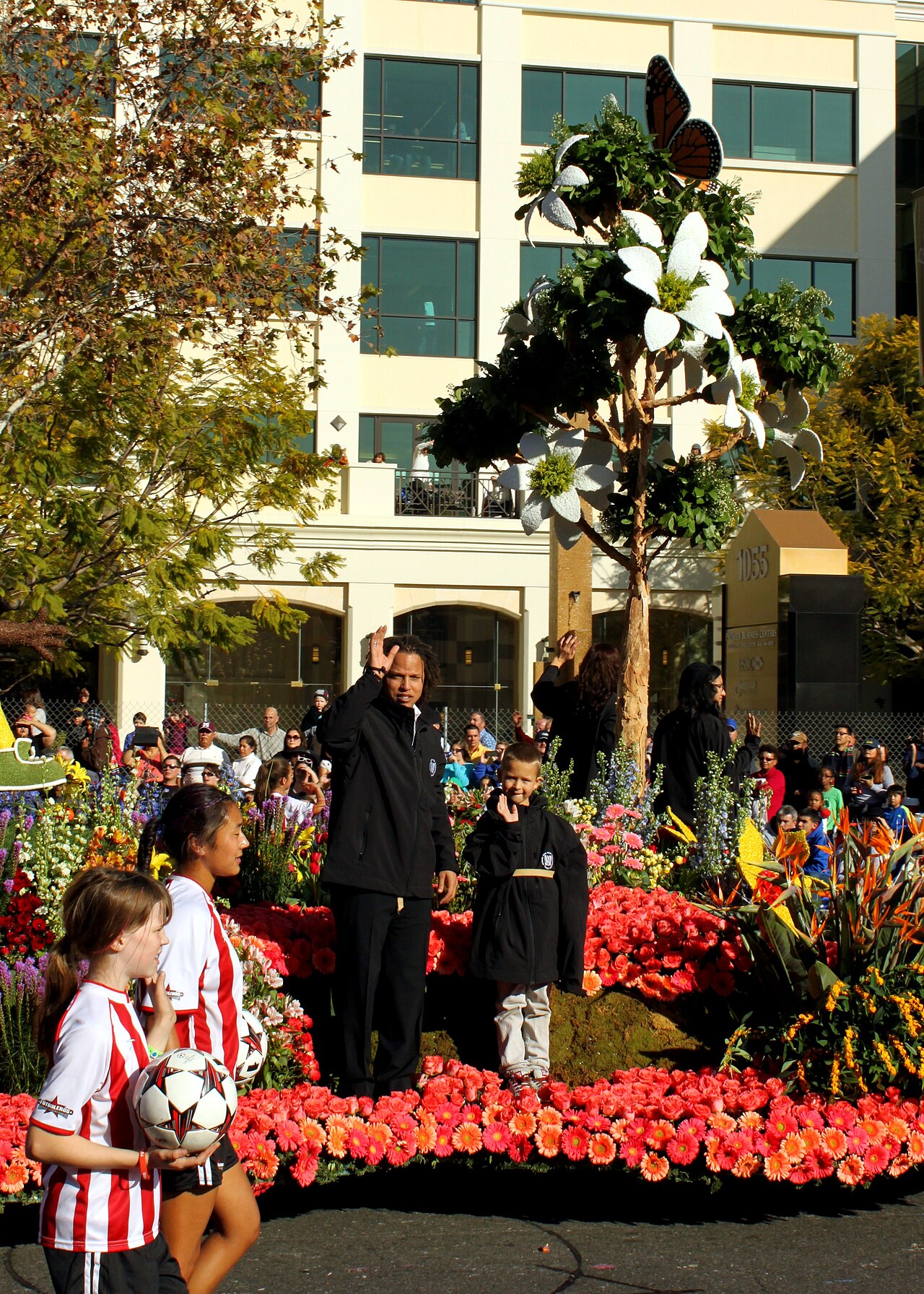
After retiring, Jones moved onto the Galaxy sideline as assistant coach under Ruud Gullit in November 2007. When Gullit resigned in August 2008, Jones assumed the interim head coach role until Bruce Arena was hired. He departed the Galaxy in January 2011 to serve as associate director of soccer with the New York Cosmos, a position he held through 2012. Off the field, Jones cultivated a broad broadcasting portfolio. He currently analyzes matches for MLS Season Pass on Apple TV and has appeared on Time Warner Cable SportsNet, Fox Sports, BeIN Sports, and the Pac-12 Network. He also hosts the Totally Football Show: American Edition. In a surprising earlier chapter, during the 1990s he fronted the MTV health program Mega-Dose, demonstrating a natural comfort in front of a camera that would later underpin his long-running soccer commentary and hosting career across multiple networks and platforms.
Roots in Southern California and a Lasting Legacy
Jones grew up in the Westlake Village area of Southern California, kicking a ball with AYSO from the age of five and later graduating from Westlake High School. At UCLA he earned a spot on the soccer squad without a scholarship and went on to become one of the program's most accomplished graduates, capturing the 1990 NCAA Division I championship and College Cup. He was also a member of the Lambda Chi Alpha fraternity. In 2009 he married Kim Reese, a music consultant and former New Line Cinema executive, in a ceremony at the Four Seasons Resort Aviara in Carlsbad; the couple has two sons, Cayden and Cai. His contributions to the sport were formally recognized in March 2011 when he was inducted into the National Soccer Hall of Fame in his first year of eligibility. Today he also participates in the ownership group of Angel City FC in the NWSL, continuing to invest in the growth of American soccer well beyond his own playing days.
Gallery
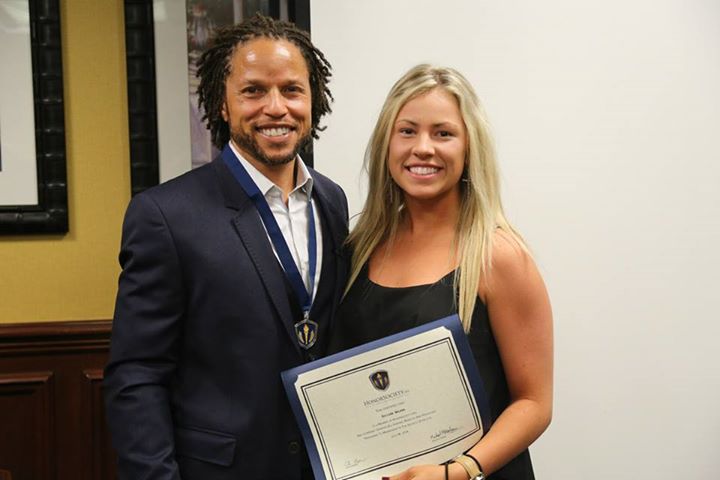
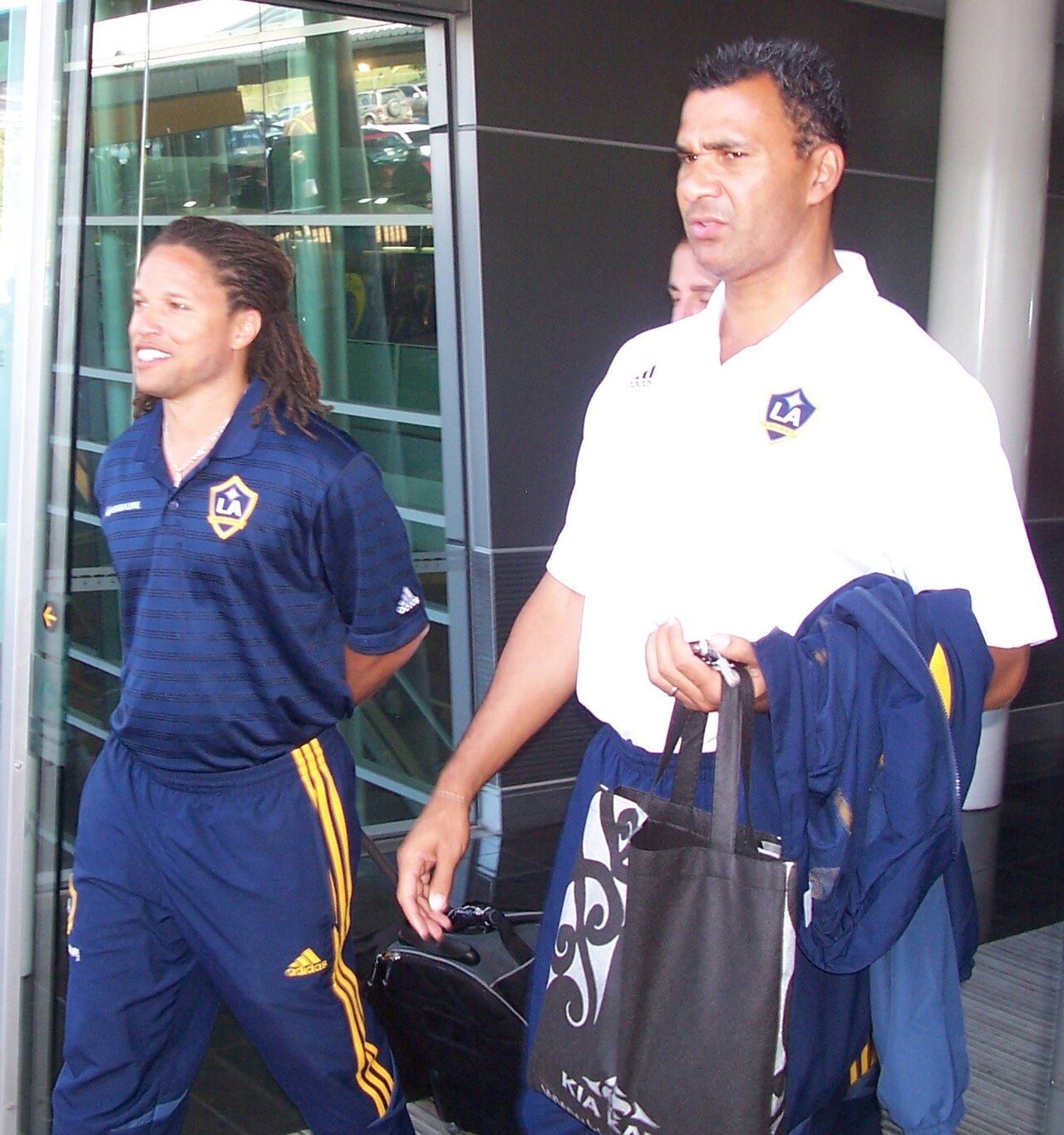
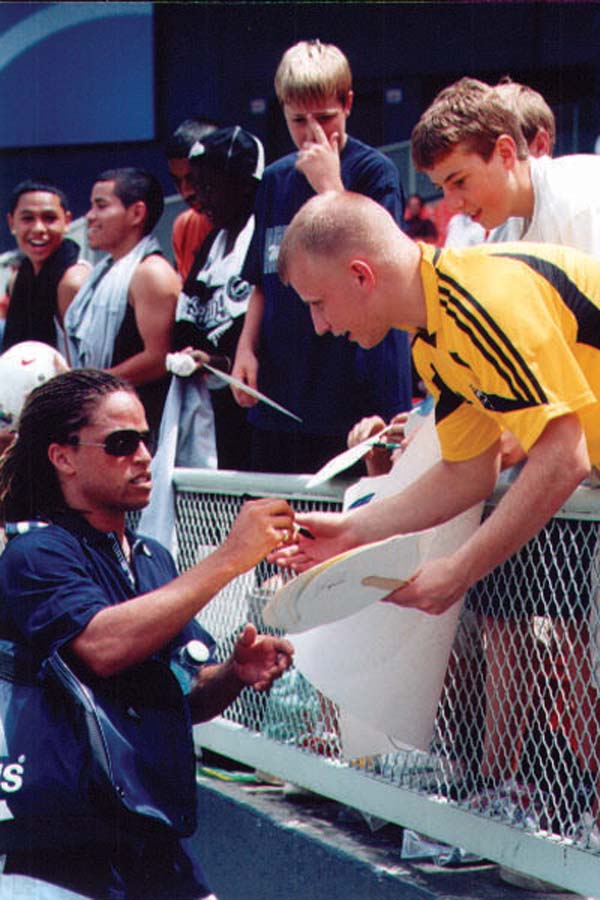
More in Team History
Elsewhere in the United States Mens National Team universe
Spotted an error? Know more?
This is a living reference — every entry is fact-audited, and reader corrections feed straight into our audit queue. Suggest an edit · See this site's audit record